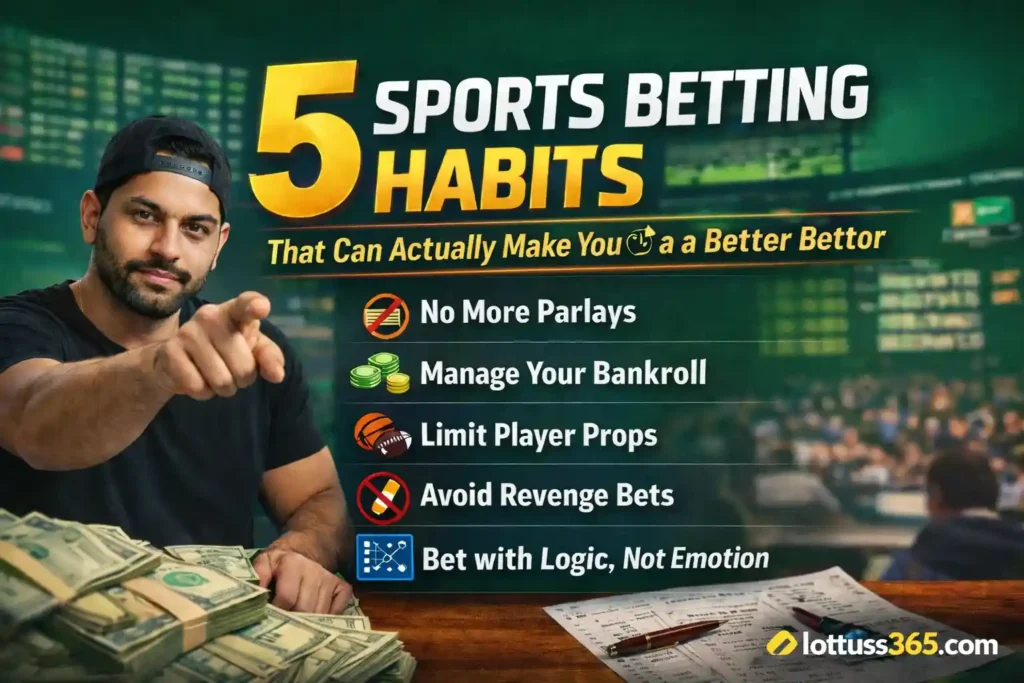
5 Sports Betting Habits That Can Actually Make You a Better Bettor
The main reason most people lose at sports betting is that they think of it as a way to get ahead instead of a system. A lot of people spend hours looking for “best picks for tonight” or “safe parlay today,” but not many of them change the way they bet. The truth is that you can’t win at betting for a long time just because you had one lucky night. It comes from having self-control, managing your money well, making better choices, and being stable emotionally.
If you can improve those areas, your betting results can improve even if your picks stay almost the same. Using these correctly will shift your mindset from that of a casual gambler to that of a serious bettor.
Table of Contents
Habit 1: Stop Depending on Parlays
One of the biggest traps in sports betting is the parlay.
At first, parlays look exciting. They promise giant payouts from a small stake, and that’s exactly why so many people love them. You can place ₹100 and dream about turning it into ₹10,000. That sounds great—until you realise sportsbooks push parlays so aggressively because they are usually great for the book and bad for the bettor.
The more legs you add to a parlay, the less likely you are to win. Even though each individual pick seems “safe”, putting them together makes the ticket much harder to cash. One bad beat, one injury, one late goal, one missed free throw, and the whole slip is over.
That’s why serious bettors usually build their betting around single bets, not long parlays.
A better approach is to treat each game or market on its own. If you like five picks on a card, you don’t need to force them into one slip. You can bet them separately and give yourself a much better chance of ending the day in profit. You can still stay in the game and even make money if two bets lose and three win, depending on the odds.
This is where many casual bettors get it wrong. They don’t actually want consistency. They want one screenshot-worthy win.
That mindset is dangerous.
A bettor who wants to grow over time needs to stop asking, “How can I win the most tonight?” and start asking, “What gives me the best chance to profit over 100 bets?”
That’s a completely different mindset.
A smarter way to use parlays
You don’t have to completely ban parlays if you enjoy them. But they should become a small side play, not your main strategy.
For example:
- Bet your strongest picks as singles first
- If you still want a parlay, combine them with a much smaller stake
- Treat parlays as fun upside, not serious bankroll building
This way, your betting account is protected even if the parlay misses.
Best mindset for this habit
Instead of chasing “big payout” slips every day, focus on repeatable winning decisions. That’s how long-term bettors separate themselves from recreational ones.
Habit 2: Protect Your Money with Bankroll Management
If there is one habit that can save a bettor from going broke, it’s bankroll management.
Most people don’t lose because they are terrible at picking games. They lose because they bet too much, too often, and too emotionally.
A bankroll is the amount of money you have specifically set aside for betting. It should never be your rent money, emergency money, or salary you can’t afford to lose. Once you mix betting money with life money, you put yourself in a dangerous position immediately.
The smartest bettors understand that survival is everything. You cannot make money in sports betting if you keep blowing up your account every few weeks.
That’s why the 2% to 3% rule is so powerful.
If your bankroll is ₹10,000, then your average bet should usually stay around ₹200 to ₹300. That might feel “too small” to some people, especially if they are used to betting aggressively, but this is exactly the kind of discipline that keeps you alive during losing streaks.
And losing streaks will happen.
Even great bettors lose often. The difference is that professionals expect losing streaks and structure their money so they can survive them. Casual bettors usually assume they’ll win more than they actually do, and when the losses come, they panic.
That panic leads to bad decisions.
You’ll often see bettors do things like:
- Put half their bankroll on one “sure shot”
- Double their stake after a loss
- Try to win back an entire bad week in one night
- Bet bigger just because they “feel due”
That’s not strategy. That’s emotional betting disguised as confidence.
How to structure your bankroll better
A clean betting structure can look like this:
- 1 unit = 2% of bankroll
- Regular bets = 1 unit
- Strong bets = 2 units
- Never exceed 3 units unless you’re extremely disciplined
This creates consistency. Instead of random bet sizing based on mood, every wager fits into a system.
And once you start betting in units instead of random amounts, your betting becomes easier to evaluate. You stop saying, “I won ₹800 today,” and start saying, “I won 3 units today.”
That shift matters because it turns betting into a process instead of a gamble.
Why small bets are powerful
A lot of people underestimate how much steady growth matters. Small profits stack over time. The bettor who wins slowly but consistently is in a much better position than the bettor who hits one giant parlay and loses everything the next week.
Bankroll management may not feel exciting, but it’s one of the biggest reasons some bettors last and others disappear.
Habit 3: Don’t Build Your Entire Betting Style Around Player Props
Player props have exploded in popularity, and it’s easy to understand why. They’re fun, they feel personal, and they make every possession exciting.
You’re not just betting a team—you’re betting whether a player scores 25 points, gets 8 rebounds, or records 2 assists in the first half. That kind of micro-betting can be entertaining, but it also comes with serious risk.
The biggest issue with player props is how many things can ruin them that have nothing to do with your read.
A player can:
- Get into foul trouble early
- Sit because of a minor illness
- Lose minutes due to rotation changes
- Get benched in a blowout
- Pick up a small injury and never return
You might have had a sharp angle and still lose because of game script or coaching decisions.
That’s why relying only on player props is dangerous.
A lot of bettors build their whole card around props because they feel easier to predict than sides or totals. But in reality, props often come with hidden volatility. They can look “safe” until the game unfolds in a completely different way.
This doesn’t mean player props are bad. It just means they shouldn’t be your only weapon.
A more balanced betting approach is much stronger. Instead of building every ticket around individual players, mix your card with:
- Team totals
- Match winners
- Spread bets
- Over/under totals
- A few carefully selected props
This creates variety and reduces overexposure to one type of market.
When player props make more sense
Player props are strongest when you have a specific edge based on role, matchup, usage, or pace. For example, a smart prop spot can occur when a player’s minutes are clearly increasing and the market hasn’t fully adjusted yet.
But random “he’s due” betting is not an edge.
A lot of bettors take player props because they like the player or because they watched one good game recently. That’s not enough. Props should still be based on logic, not vibes.
Better way to think about props
Before placing a player prop, ask yourself:
- Will this player definitely get normal minutes?
- Could game script ruin this?
- Is this line already inflated because the player is popular?
- Am I betting this because I found value or because it looks fun?
Those questions can save you from a lot of bad slips.
Habit 4: Never Revenge Bet
This habit might be the most important of all.
Revenge betting is what happens when you lose a bet and immediately try to get your money back with another one—usually without proper research, patience, or discipline.
This is where betting stops being strategy and starts becoming emotional damage control. Almost every bettor has felt the same feeling before.
You lose a game in a frustrating way. Maybe your team blows a late lead. Maybe your over misses by one point. Maybe a player you bet on gets injured in the first quarter. You feel angry, cheated, and desperate to recover.
Then your brain starts talking:
“I need to get that money back tonight.”
That’s the danger zone.
Because the next bet usually isn’t made from logic. It’s made from frustration.
And frustration is one of the fastest bankroll killers in sports betting.
The problem with revenge betting is not just that it creates more losses. It also destroys your process. You stop checking injury news properly. You stop comparing odds. You stop asking whether the bet is actually good. You only care about recovering emotionally.
That mindset almost always leads to worse decisions.
The better response after a loss
Good bettors understand something casual bettors hate to accept: some losses are just part of the game.
You are not supposed to win every day. You are not supposed to “get it all back” immediately. A mature bettor can take a bad beat, close the app, and come back the next day with a clear mind.
That is a huge skill.
What to do instead after a bad loss
When you lose and feel emotional:
- Step away from the betting app
- Don’t force a late-night random bet
- Review what happened calmly
- Ask whether the loss was bad luck or a bad read
- Wait until your next researched spot
That pause is powerful.
It may not feel exciting, but it protects both your bankroll and your decision-making.
Rule to live by
If you feel angry, rushed, desperate, or tilted, do not place the next bet. That one rule alone can save many bettors a huge amount of money.
Habit 5: Bet with Logic, Not Emotion
This situation is where many bettors lose before the game even starts. They bet with their heart.
They back their favourite team because they support it. They take their favourite player’s over because they want him to go off. They refuse to fade a team they love, even when the numbers clearly say the other side has value.
That’s not betting. That’s fandom. And fandom is expensive.
If you support a team, you naturally want them to win. That emotional connection can make it almost impossible to judge them honestly. You overlook weaknesses, ignore bad matchups, and talk yourself into bets that aren’t actually sharp.
A disciplined bettor must separate being a fan from being a bettor. Sometimes the smartest bet is actually against the team you like.
That can feel uncomfortable at first, but it’s one of the clearest signs that you’re growing as a bettor. Once you stop treating betting like loyalty and start treating it like analysis, your decisions improve immediately.
How to become more logical
Before placing any bet, ask yourself a few simple questions:
- Would I still make this bet if the team I was betting on wasn’t my favourite team?
- Am I acting on feelings or real value?
- Does the data back up this choice?
- Would I still like this bet if someone else showed it to me?
These questions create distance between your emotions and your bankroll. And that distance matters a lot.
Smart bettors focus on edges
The goal is not to bet who you want to win. The goal is to find value.
Sometimes that means backing ugly teams. Sometimes it means fading popular favourites. Sometimes it means passing entirely because there is no real edge.
That patience is what makes logic-based betting stronger than emotional betting.
FAQs – Common Betting Mistakes
Why do most bettors lose money on parlays?
Even if one game wins, parlays don’t often hit because more than one leg fails.
Don’t bet on them as main bets; think of them as fun extras after singles.
Bet books promote them to make the house edge bigger.
How much should I bet per game?
To stay in the game, keep your losses to 2–3% of your total bankroll. To stay in the game, keep your losses to 2–3% of your total bankroll.
Don’t bet your whole roll or pay cheque on one game. Don’t bet your whole roll or pay cheque on one game.
This makes money over time. This makes money over time.
Are player props reliable for daily betting?
No, because things like injuries or early exits can happen.
Mixing with team bets will give you better odds.
These risks are higher with apps like PrizePicks.
Should I bet on my favourite team?
No, always use data, even if it means fading your team if the odds are against them.
Bets based on feelings lose money over time.
In cricket or any other sport, logic maximises edges.