
Lotus365 Account Verification Process (KYC Guide for 2026)
The process of opening the account does not take time, but true confidence on the platform derives from one thing: security. This explains why the process of verification of the Lotus365 account is critical for people wanting a more streamlined process, especially concerning the processing of withdrawals, the overall higher processing limit for the accounts, and the safeguarding of your identity. By 2026, the verification process is more than just a procedure that needs be gone through.
KYC is often delayed by many users who think the process is complex and time-consuming. The thing is, the KYC process is easy if a user knows what needs to be submitted and how things should be aligned. It is a common practice for KYC failures to occur because a user does not have the required documents, but because a user uploads pictures that are not clear, the name does not match, and the user’s bank information is not in sync with the account. The solution is to view the KYC as a one-time configuration.
This blog outlines the process of Lotus365 verification in detail, and if you’re eager to have a seamless betting process without any hassles in the future, this article will definitely save you time and effort.
Table of Contents
What is Account Verification on Lotus365?
“Account verification or “KYC verification” is the process of ascertaining that your Lotus365 account is owned by a physical human being and that the payment/withdrawal information is valid.” This ensures that a user’s account is not misused through “identity fraud, multiple accounts, or monetary deception.” However, this is no different for Lotus365 because “KYC is a common security procedure for all digital monetary services.”
For a Lotus365 account, the process of verification may include:
- Indentity proof, identity, who you are,
- Address proof (Residence proof)
- An address proof
- Payment Proof (your banking / UPI Info must match your identity
It is a common practice for the verification of authenticity to be accompanied by a self-portrait
This is because it ensures that the transaction is made to the right individual and thus limits account lockouts due to a verification of suspicious activity.
Why Lotus365 Verification is Required
Verification is more than a “rule”—it’s also a benefit for the user. As soon as money is brought into the equation, a system must be in place for verification of the user as the actual holder of the account. Without verification, issues such as money laundering and chargeback fraud are hard to stop.
These are the most important reasons for the strong promotion of verification by Lotus365:
a) Faster withdrawals
Most platforms prioritise verified accounts for withdrawals because there’s less risk of fraud. Lotus365 withdrawal requirements explicitly mention verification steps (ID, address proof, selfie).
b) Preventing multiple accounts
Account verification helps enforce the rule that one person should have one account. Lotus365 also notes that multiple accounts may lead to suspension.
c) Security against identity misuse
In India, identity misuse is a growing issue. Verification helps prevent accounts being created using someone else’s details. Even government e-KYC systems have warned against fake portals used to steal details, which highlights why users should verify only on official sites.
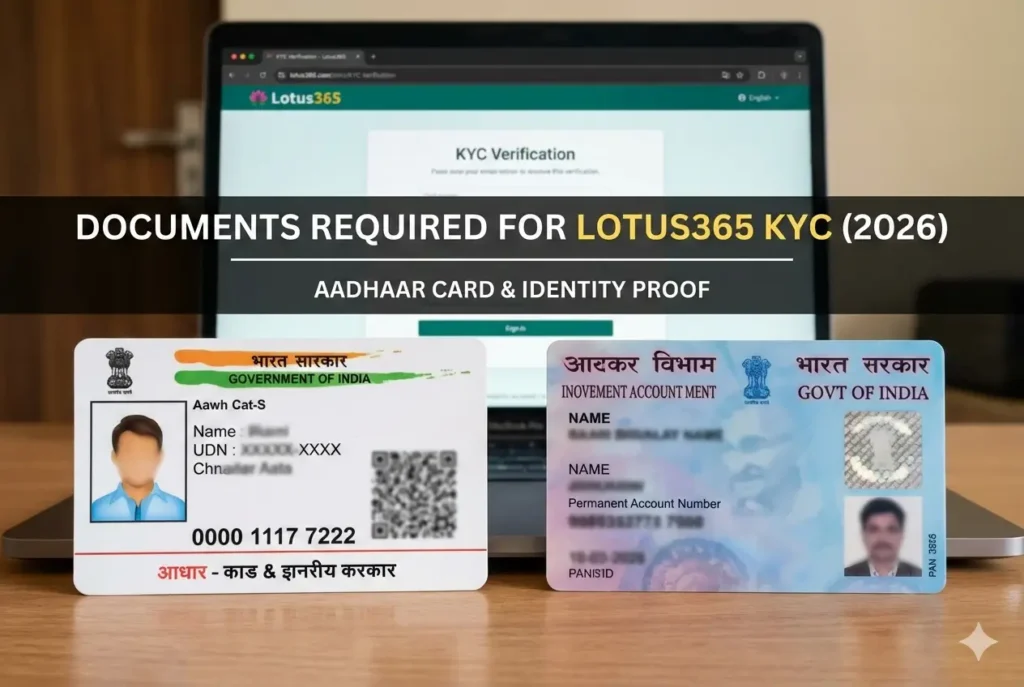
Documents Required for Lotus365 KYC (2026)
To complete your Lotus365 verification smoothly, keep your documents ready in advance. While the exact set can vary slightly depending on account status or withdrawal method, the standard KYC checklist in India typically includes:
Identity Proof (any one)
- Aadhaar card
- PAN card
- Passport
- Driving licence
- Voter ID
Address Proof (anyone)
- Aadhaar card (if it includes address)
- Utility bill (electricity/water/gas)
- Bank statement with address
- Passport
Payment Proof (recommended)
- Bank account details / cancelled cheque (in some workflows)
- UPI ID screenshot or bank passbook page
Industry-standard KYC requirements commonly use identity proof + address proof documents.
Important: Always ensure that the name on your KYC documents matches your profile name. Even a spelling mismatch can cause rejection.
Lotus365 Account Verification Process: Step-by-Step
This is the same verification procedure most users go through.
Step 1: Log in to your Lotus365 account
Go to the official platform to access your dashboard.
If you’re a newcomer, this sign-up tutorial describes the process for the_OTP solution.
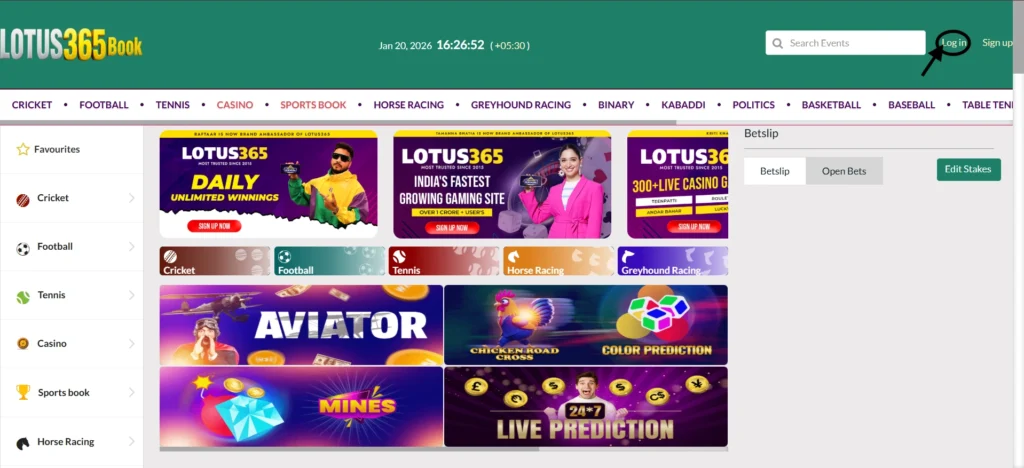
Step 2: Open the verification/KYC section
From the user dashboard, proceed to:
Profile / Account settings / Verification / KYC
Step 3: Enter personal details carefully
Fill in:
- full name (as per Aadhaar/PAN cards)
- DOB
- address
- “Mobile number (already linked)”
- email (as required)
Step 4: Upload identity proof
Upload a clear image/photo of your ID.
Upload tips that avoid rejection:
- using daylight or bright light
- remove blur
- avoid shadows
- don’t crop important corners
- ensure document is not expired
Step 5: Upload address proof
Upload an address proof document.
If Aadhaar is used, Aadhaar image should also be legible. If utility bill is used, ensure that:
- bill is recent
- name/address is visible
Step 6: Selfie verification (if asked)
Some platforms require a selfie to confirm that the person uploading the ID is the owner. If you’re asked for a selfie:
- remove cap/helmet
- no sunglasses
- face should be fully visible
- avoid filters
Step 7: Submit and wait for review
Once submitted, verification enters “pending” status.
Common Verification Mistakes (and How to Fix Them)
Verification failures are predictable. Here are the most common reasons:
1) Blurry document images
Fix: retake image in daylight and use a plain background.
2) Mismatch in details (name, DOB)
Fix: update profile details to match document exactly.
3) Bank/UPI mismatch
Many withdrawal rejections happen because the bank account name doesn’t match the Lotus365 profile name.
4) Expired documents
Fix: upload a valid non-expired document.
Verification & Withdrawals: What Changes After KYC?
This affects withdrawals. When the accounts are verified:
- Your withdrawal requests are more likely to be approved smoothly.
- less manual verification is required
- decreased “security hold” probability
- higher trust score on account actions
Platforms usually have a requirement for the withdrawal of funds using the same payment method that is used for depositing, as the verification process is done as part of the fulfillment of withdrawal terms.
Lotus365 Login
Before performing KYC, you need to ensure you are indeed logging in to the proper platform and doing it correctly. Remember to perform Lotus365 Login via the official platform and with the proper credentials, and avoid entering your credentials on lookalike pages or links. An effective login will keep your verification and personal information secure, and it also helps to prevent any problems with accessing your accounts, such as delaying the verification procedure.
For a full login walkthrough, follow:
Lotus365 login web and mobile guide
Also useful:
Lotus365 login page
How Long Does Lotus365 Verification Take?
Verification time depends on:
- submission quality (clear docs = faster)
- platform traffic (IPL season = slower)
- whether manual review is needed
In most cases, it can be completed within a few hours to 24–48 hours. If you submit perfect documents, it usually moves quickly.
Real Examples of Verification Issues (Practical Scenarios)
Example 1: Name mismatch
Rohit signs up as “Rohit K.” but Aadhaar shows “Rohit Kumar Sharma”.
Result: KYC rejected.
Fix: update profile name to match Aadhaar exactly.
Example 2: UPI mismatch
User deposits using PhonePe UPI but tries to withdraw using a different person’s bank account.
Result: withdrawal gets rejected and verification remains pending.
Fix: use payment method under the same name as verified account.
Example 3: Blurry PAN upload
User uploads a PAN photo taken at night with flash glare.
Result: “document unclear”.
Fix: retake the photo in daylight.
Use these links to know more about our Lotus 365 site:
For safe and further guidance refer to :
Conclusion
Account verification in Lotus365 is one of the most essential steps you can do if you want to have an hassle-free experience in the system. Be assured that account verification is not made to give you hassles but to give you extra protection from having your identity stolen. After successfully completing the KYC process in Lotus365, you can be certain that you’ll be less likely to experience failed payouts, lockouts, as well as security holds. All you have to do is to ensure that everything you provide is accurate, legible, and accessed from the Lotus365 official login pages.
FAQs Lotus365
Q1. Is Lotus365 verification mandatory?
Verification is strongly recommended, especially if you want smooth withdrawals and uninterrupted account access.
Q2. What documents are required for Lotus365 KYC?
Typically identity proof + address proof such as Aadhaar, PAN, passport, voter ID, or driving licence.
Q3. Why is my Lotus365 verification rejected?
Common reasons include blurry images, mismatched name/DOB, expired documents, or bank/UPI mismatch.
Q4. Can I withdraw without completing verification?
Withdrawals may be delayed or blocked if KYC is incomplete, especially for higher amounts.
Q5. How to do Lotus365 Login securely before verification?
Use only the official login page and avoid unknown links.